
After a Record 2025, Maldives Tourism Hits Sharp Turbulence in March 2026
by Mohamed Hilmy
03 May 2026
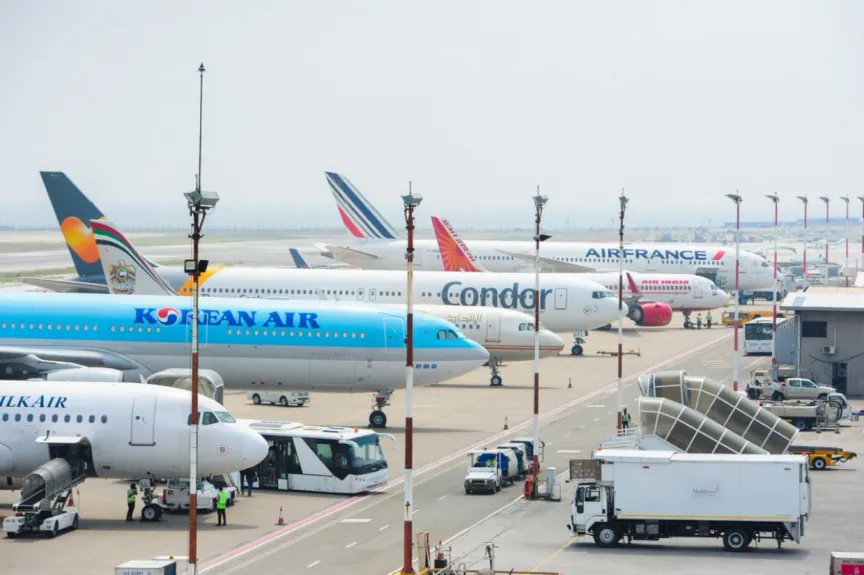
Tourist arrivals to the Maldives dropped 21% in March 2026 compared to the same month last year, according to the Maldives Monetary Authority's Annual Report 2025. The decline follows a 10% year-on-year increase in January and February 2026 and marks a sharp reversal in what had been a record-breaking run.
The MMA attributed the drop directly to flight cancellations and airspace closures across key Gulf hubs, following the escalation of conflict in the Middle East. Most European travellers reaching the Maldives connect through Doha, Dubai, or Abu Dhabi. Disruptions to those corridors cut off a significant share of inbound traffic.
Europe accounted for 59% of Maldives arrivals in 2025. The region's reliance on Gulf transit routes makes it particularly exposed when airspace over the Middle East becomes unstable.
GDP Forecasts Under Pressure
The MMA and the Ministry of Finance had jointly projected real GDP growth of between 4.8% and 5.3% for 2026 in October 2025. Those projections assumed continued tourism expansion. Given the March data and ongoing uncertainty, the MMA confirmed the forecasts are expected to be revised downwards.
The closure of the Strait of Hormuz has added a further layer of pressure. Disruptions to global supply chains are pushing up energy prices, with knock-on effects expected on domestic production costs and consumer prices. Inflation in the Maldives had already risen to 4.0% in 2025 from 1.4% in 2024, partly due to tobacco tax increases. The MMA now expects further upward pressure on 2026 inflation relative to earlier projections.
A Record Year Followed by an Abrupt Turn
The timing is sharp. The Maldives had just closed its strongest year on record, with 2,246,516 arrivals in 2025, travel receipts of US$5.6 billion, and a new all-time monthly record of 224,455 arrivals in December. The 21% March drop is the first significant downside figure to follow that run.
How the situation develops in April and May will matter considerably. Those months fall within the shoulder season, when European bookings typically begin softening anyway. If Gulf air routes normalize before peak November to January travel resumes, the full-year impact may remain contained. If disruptions continue into the third quarter, the implications for resorts and guesthouses dependent on European visitors will be more serious.
Author
Mohamed Hilmy
Leave a comment
Comments
No comments yet. Be the first to comment!
Must Reads
Visit Maldives Represents the Maldives at PATA Travel Mart 2026 in Sarawak
MACL Named Official Aviation Partner for World Travel Awards Maldives 2026
Visit Maldives Unveils "Islands Are Us" as Theme for Tourism Year 2027

Maldives Tourism Tops 1.2 Million Arrivals, With July Up 46 Percent on June
10 August 2026

MATI Chief Praises BML’s Commitment to Tourism Sector
08 May 2026

Bank of Maldives Completes International Non-Deal Roadshow, Signals Intent to Access Global Debt Markets
08 May 2026

Maldives Tops 2.25 Million Arrivals in 2025, Revenue Hits US$5.6 Billion
03 May 2026

Hotelier Maldives Awards 2026 Names Winners Across 35 Categories at Kurumba Ceremony
01 May 2026